
 English
 Español
 Portugues
 Pусский
 Français
 Deutsch
 한국어
한국어 العربية
 Italiano
 Svenska
 Polski
 ไทย
ไทย Türk dili
 हिन्दी
 Tiếng Việt
 中文
中文 қазақ
қазақ বাংলা
বাংলা فارسی
فارسی українська
 беларускі
 Suomalainen
 o'zbek
 Србија
 پښتو
پښتو საქართველოს
 Shqipëria
 Afrikaans
 Kikongo
Direkte sprøjtestøbeform
Direct Injection Molding: A Comprehensive Overview Direct injection molding is a highly efficient manufacturing process used to produce plastic parts with precision, consistency, and scalability. This method involves injecting molten plastic material directly into a mold cavity, where it cools and solidifies into the desired shape. It is widely employed across industries such as automotive, electronics, medical devices, and consumer goods due to its ability to produce complex geometries with tight tolerances. Key Components and Process The direct injection molding process consists of several critical components: 1. Injection Unit: Plastic pellets are fed into a heated barrel, where they are melted and homogenized. A screw or plunger then forces the molten material into the mold. 2. Mold Tool: Custom-designed to the part’s specifications, the mold consists of two halves (core and cavity) that form the part’s shape. Cooling channels help solidify the material quickly. 3. Clamping Unit: Holds the mold halves together under high pressure during injection to prevent defects like flash or warping. 4. Ejection System: Once cooled, the finished part is ejected automatically, and the cycle repeats. Advantages - High Precision: Capable of producing intricate designs with minimal post-processing. - Material Efficiency: Minimal waste, as excess material can often be recycled. - Scalability: Ideal for high-volume production with consistent quality. - Versatility: Compatible with a wide range of thermoplastics, elastomers, and composite materials. Challenges - High Initial Costs: Custom mold fabrication can be expensive, making it less economical for low-volume runs. - Design Constraints: Part geometry must account for factors like draft angles, wall thickness, and gate placement to avoid defects. - Cycle Time: Cooling and ejection phases can limit production speed for thick-walled parts. Applications Direct injection molding is used to manufacture components such as: - Automotive parts (dashboards, bumpers) - Medical devices (syringes, housings) - Consumer electronics (phone cases, connectors) - Household items (containers, caps) Conclusion Direct injection molding remains a cornerstone of modern manufacturing due to its efficiency, repeatability, and adaptability. While the upfront investment is significant, the long-term benefits in quality and cost-effectiveness make it indispensable for mass production. Advances in materials, mold design, and automation continue to expand its capabilities, ensuring its relevance in future industrial applications.
produkt
Klassifikation:
-
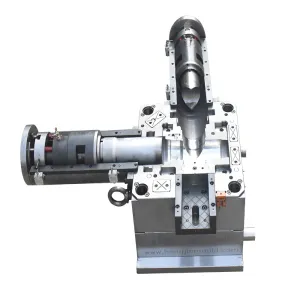
CPVC Tee Pipe Fitting Form
kategori: CPVC rørfitting formVisninger: 511serienummer:frigivelsestid: 2025-11-13 17:20:16CPVC Tee Pipe Fitting FormFormens navn:CPVC Tee Pipe Fitting FormHulrum: 2 hulrumFormstørrelse: 50-110 mmFormstål: Tyskland2316 kina2316 eller 4cr13 til hulrummet og kernenPort: direkte portformstruktur: VinkelstiftHårdhed af kerne/hulrum: HRC 40-45° grader efter vakuum varmebehandlingSprøjtestøbemaskine: 250-450T Taizhou Huangyan Hong Jin mold Co., Ltd blev etableret i 2002. Vi er professionelle inden for design og fremstilling af rørfittingsformen i mere end 23 år.Vi ser frem til et langt samarbejde med dig.Følgende er de vigtigste oplysninger til din reference.Ofte stillede spørgsmål:1. Hv...
nyheder
Klassifikation:
-
[industry news]Vidste du, at temperaturen har indflydelse på sprøjtestøbnin...
2024-06-27 11:47:24
sagen
Klassifikation:
video
Klassifikation:
Hent
Klassifikation:
Ingen søgeresultater endnu!
rekruttering
Klassifikation:
Ingen søgeresultater endnu!
Anbefalede produkter
Ingen søgeresultater endnu!




 Whatsapp
 Telefon